
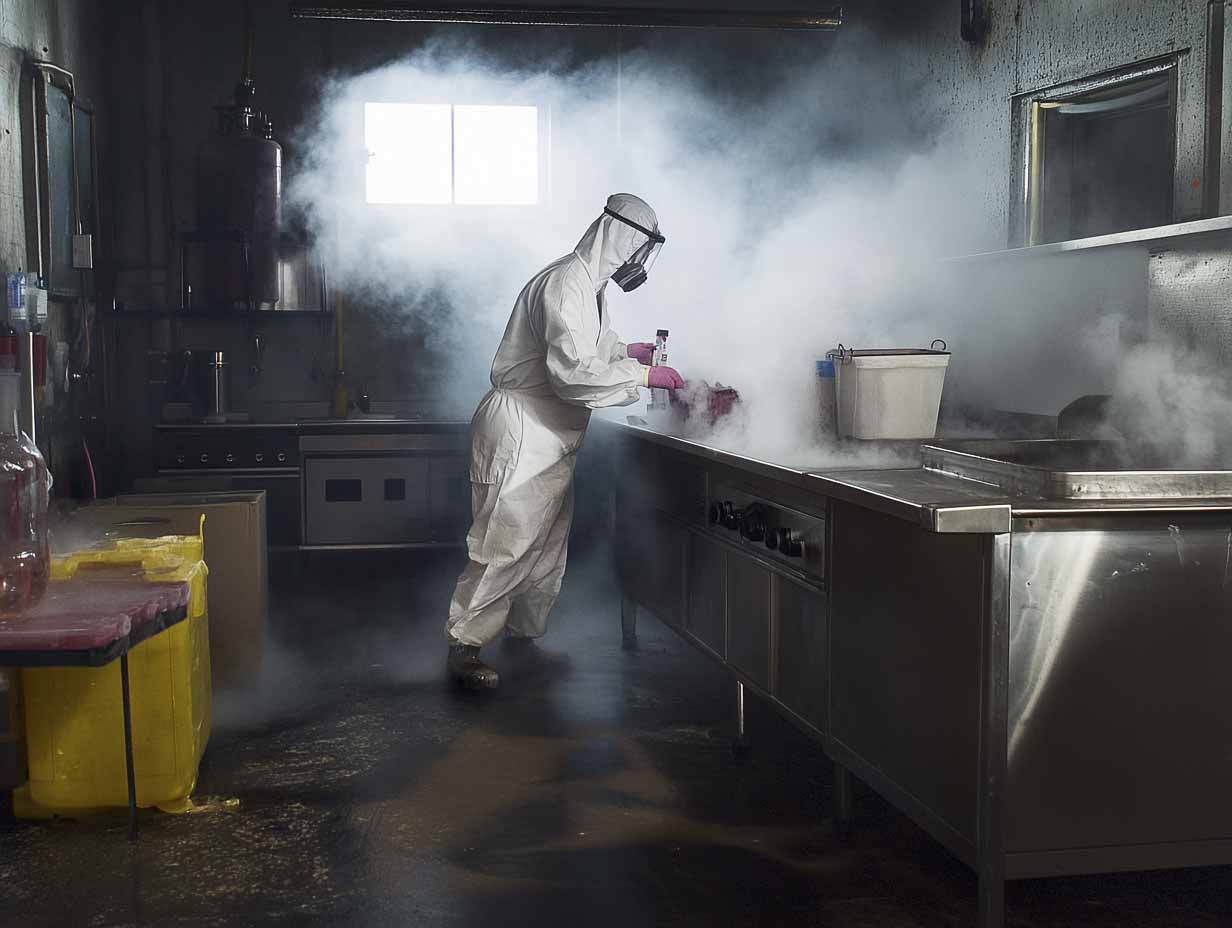
Utilize advanced methodologies to assess contamination and identify hazardous chemicals and toxins.
Eliminate hazardous substances and conduct thorough decontamination of all surfaces to eradicate residuals associated with methamphetamine synthesis.
Diminish volatile organic compounds and reinstate air quality to acceptable parameters.
Repair structural damage, substitute affected materials, and rehabilitate the environment to a safe and livable state.
Facilitate the procurement of decontamination records and support the evaluation and certification processes.
Methamphetamine production facilities emit a variety of hazardous chemicals that contribute to significant health risks for both workers and surrounding communities. Exposure to these toxic substances can result in numerous health complications, such as respiratory disorders, dermal irritations, chemical-induced injuries, and potential long-term neurological impairments that can last for years. Additionally, individuals may experience a range of other health issues that can severely impact their quality of life. These toxic agents can persist within the environment for extended periods, thereby posing continuous and escalating dangers to individuals who may unwittingly access the contaminated area, often leading to unforeseen health consequences. It is essential for communities to be aware of these risks to protect themselves and promote health and safety measures in response to these threats.
Decontamination is an essential and intricate process specifically designed to thoroughly eliminate all residual harmful chemicals, pathogens, and toxins. This undertaking is critical to mitigating the risk of further environmental and property contamination, which could have long-term repercussions. Effective decontamination protocols are vital for safeguarding not only the health of current occupants but also the well-being of future inhabitants, thus preserving a safe environment. Additionally, these measures play a crucial role in minimizing associated health hazards, which can range from mild irritations to more severe health risks. Furthermore, restoring the property to a condition that meets established safety and habitability standards is imperative for ensuring community health and confidence, ultimately contributing to the overall betterment of public health and environmental safety.
Engaging certified professionals for decontamination processes guarantees a meticulous and safe approach that adheres strictly to rigorous legal standards and industry best practices. These highly trained specialists possess not only the necessary equipment and advanced technology but also the extensive expertise required to effectively eliminate various hazardous substances and contaminants. This thorough process is vital for protecting public health and safety while ensuring compliance with all relevant safety regulations. By following these protocols, these experts help avert potential legal ramifications that could arise from improper decontamination, ultimately preserving property value and maintaining a safe environment for everyone involved. Their commitment to excellence ensures that no detail is overlooked in the fight against hazardous materials.


We use cookies to improve your experience on our site. By using our site, you consent to cookies.
Manage your cookie preferences below:
Essential cookies enable basic functions and are necessary for the proper function of the website.
These cookies are needed for adding comments on this website.
Google reCAPTCHA helps protect websites from spam and abuse by verifying user interactions through challenges.
Statistics cookies collect information anonymously. This information helps us understand how visitors use our website.
Google Analytics is a powerful tool that tracks and analyzes website traffic for informed marketing decisions.
Service URL: policies.google.com
You can find more information about our Cookie Policy and Privacy Policy.