
A sewage backup in your basement raises two questions fast: whose fault is it, and who pays for the cleanup? Here’s how to tell where it started and what to do next in Philadelphia, Bucks, Montgomery and Delaware Counties.
The short answer
Most of the time, the homeowner is responsible: the sewer pipe from your house to the public main is usually yours to maintain, and most sewage backups start there. The town or sewer authority is usually responsible only when the public main itself caused the backup, and even then Pennsylvania law limits when you can recover damages.
Who’s at fault and who pays are two different questions. Whether insurance covers the cleanup depends on whether your policy has sewer backup coverage, not on whose pipe failed.
Who owns which pipe
| Pipe | Where it runs | Usually maintained by |
|---|---|---|
| House drain | Inside your home, to the foundation wall | Homeowner |
| Lateral | From your foundation to the public sewer under the street | Homeowner (in most towns) |
| Public sewer main | Under the street | Town, sewer authority or water department |
The lateral is the pipe that carries everything from your house to the sewer under the street. Because it’s usually the owner’s responsibility, so is a clog or collapse in it.
How to tell where the sewage backup started
When it happens tells you a lot about where the blockage is.
| What you notice | Likely source | Who to call |
|---|---|---|
| Sewage comes up only when you run water, flush or do laundry | A blockage in your own lateral or house drain | A licensed plumber or sewer cleaning service |
| Sewage comes up when nobody is using water | The public sewer main, often during heavy rain | Your town, sewer authority or water department, right away |
| One fixture backs up, others drain fine | A clog in that fixture’s branch line | A plumber |
| Backup during a storm, with street flooding | An overloaded public sewer or surface flooding | Your town or water department; note the time and weather |
Marple Township in Delaware County gives homeowners the same rule of thumb: sewage entering when no one is using water points to the township main (Marple Township). A plumber’s camera inspection settles it, and the video becomes evidence for any claim.
When the town or sewer authority may be responsible
In Pennsylvania, towns and municipal authorities are generally protected from lawsuits, with a narrow exception for their utility systems, including sewers. Under that exception, a homeowner generally has to show three things (Marshall Dennehey):
- The damage came from a dangerous condition in the town’s sewer, in the public right-of-way
- The town knew about the condition and didn’t fix it
- That condition caused your damage
Deadlines are short. A claim against a local agency generally requires written notice within six months of the damage (TortTalk on 42 Pa.C.S. § 5522). If you think the public main caused your sewage backup, report it to the town right away, in writing, and talk to a Pennsylvania attorney.
What helps: photos and video of the sewage backup, the date and time, the weather, whether water was in use, the plumber’s camera footage, and any earlier backups on your street that you or neighbors reported.
This page is general information from a restoration contractor, not legal advice.
Does homeowners insurance cover a sewage backup?
Often not, unless you added sewer backup coverage. Standard homeowners policies generally exclude water that backs up through sewers and drains; coverage is added through an endorsement, often called “water backup” or “sewers, drains and sump pumps,” for an extra premium (Marple Township; Leavitt Group).
Things to know about that endorsement:
- It usually has its own dollar limit, separate from the rest of the policy. Check the number before cleanup starts.
- It typically covers damage to the home and belongings, not repairs to the broken pipe or sump pump itself.
- It doesn’t cover flooding from outside. Floodwater is a separate policy.
- The pipe from your house to the street is a third, separate coverage, usually called service line coverage.
To check: find “water backup” or “sewer” on your declarations page, or ask your agent one question: “Do I have water backup coverage, and what’s the limit?”
In your county
Philadelphia. The Water Department maintains the sewers in the street; the homeowner is responsible for the house drain, the lateral and the connection where it joins the public sewer (PWD customer responsibility diagram). If your basement backs up during wet weather, the city’s Basement Backup Protection Program installs a backwater valve free for eligible homeowners. The program page lists (215) 685-4901 for backups happening now. See our Philadelphia service area.
Delaware County. Sewers are run by individual townships and boroughs. In Marple Township, for example, owners maintain their lateral through the connection to the township main, and the township is generally not liable except in the limited cases above (Marple Township). Check your own town’s rules. See our Delaware County service area.
Bucks and Montgomery Counties. Sewer service comes from your township, borough or a municipal sewer authority, and the rules for who maintains what vary. Your sewer bill names who runs your system; call them first if you suspect the main.
Private septic. Homes on septic instead of public sewer own the whole system, so a sewage backup is a septic service call, not a town matter.
What to do right now after a sewage backup
Sewage is Category 3 water under the IICRC S500 standard, the most contaminated kind, so treat everything it touched as unsafe until it’s cleaned.
- Stop using water: no flushing, showers, dishwasher or laundry.
- Keep people and pets out, especially children, older adults and anyone with a weak immune system.
- Stay away from electricity if water is near outlets, cords or the panel.
- Document everything: photos and video, the time it started, the weather, and whether water was in use.
- Report it: to your town or water department if you suspect the main, and to your insurer if you have backup coverage.
- Call a professional for cleanup. Porous materials that sewage soaked, like carpet, pad and drywall, usually have to be removed, not just dried.
Don’t wait on fault before starting sewage backup cleanup. Your policy expects you to prevent further damage, and sewage left in place leads to mold and more removal. Learn more about our sewage backup cleanup.
From the field
In Chester, an investor had closed on a house just two days earlier, and the last occupants had only just moved out. Within about 72 hours, vandals got in and cut the copper water lines out of the first- and second-floor bathrooms. Water sprayed from both floors and drained down into the basement until it stood about four feet deep.
We shut off the water and electric, pumped the basement out, and only then found the rest of the problem: a section of the sewer line was missing, most likely never built right in the first place. The floodwater had been mixing with sewage the whole time, which turned a flooded basement into a Category 3 cleanup.
It became a complex insurance claim. With police reports confirming the theft and vandalism, and photos of every stage, the insurer covered it.
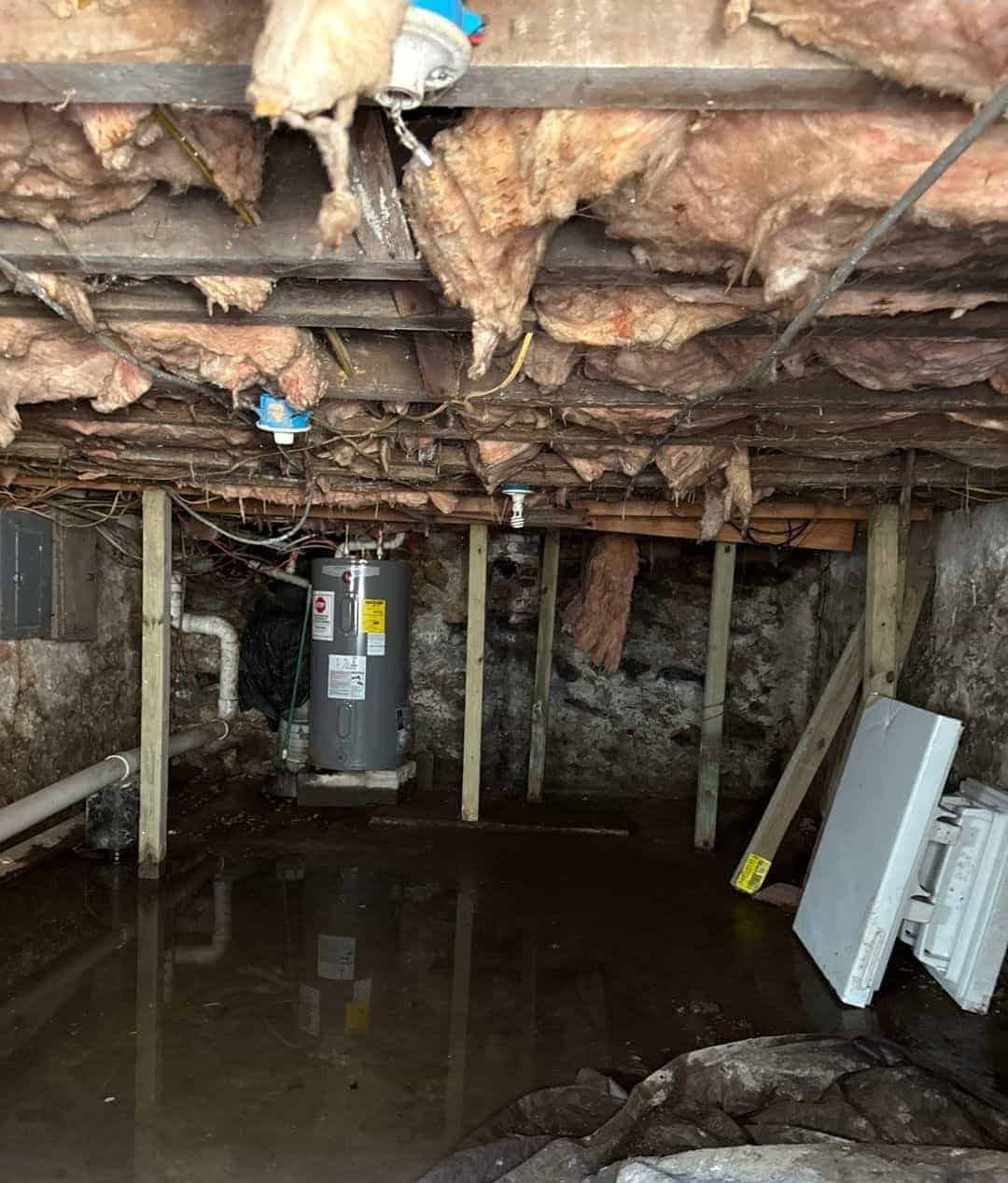
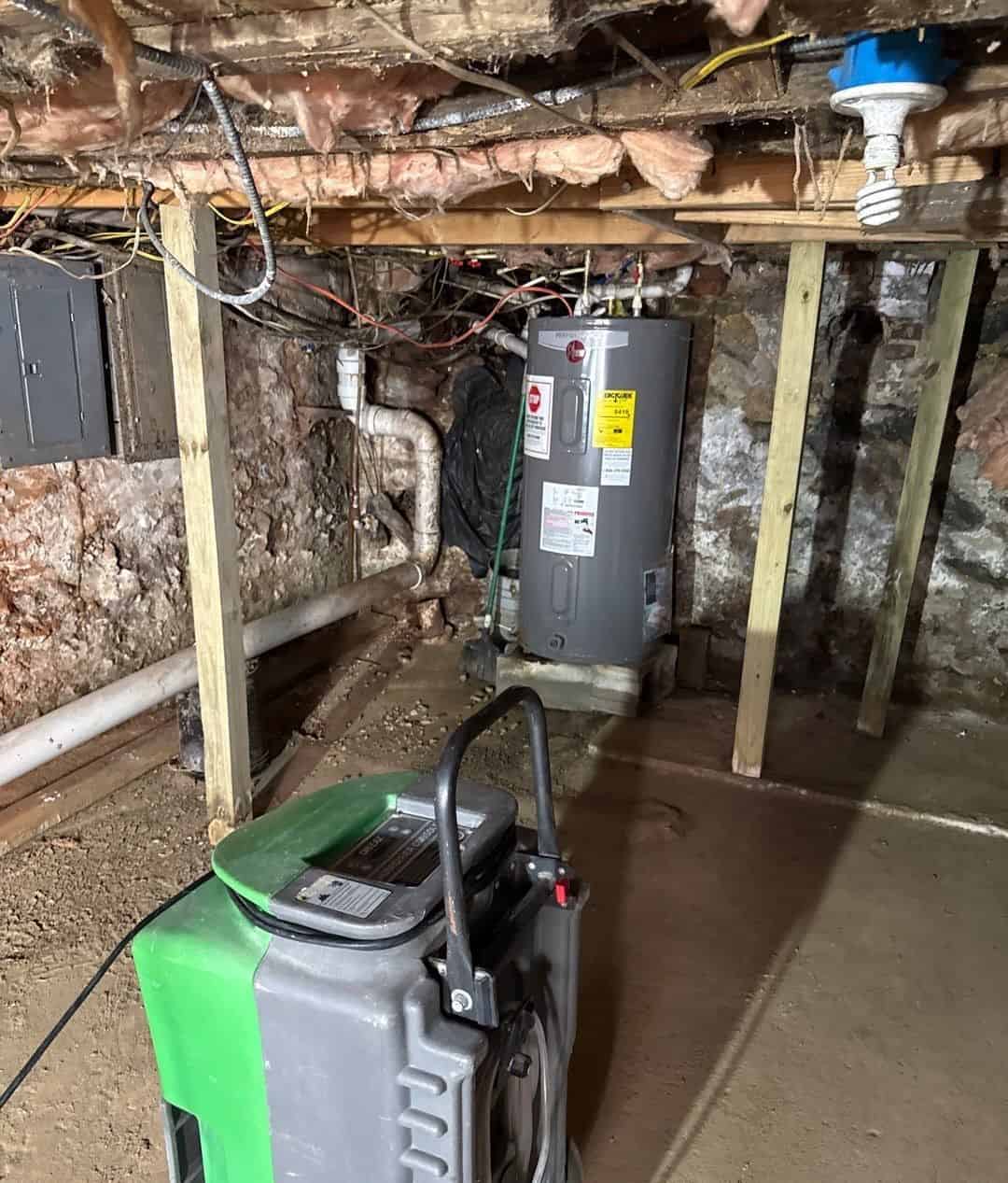
None of it was the town’s fault. Every failure started inside the house, on the owner’s side of the pipes. In a house that sits empty, a regular walk-through, or simply shutting the water off at the main, is the difference between a plumbing repair and a basement full of contaminated water.
Questions to ask
- Your agent: “Do I have water backup coverage, and what’s the limit?”
- Your plumber: “Can you camera the line and tell me whether the blockage is in my lateral or the main?”
- Your town or sewer authority: “Have there been other sewage backups on my street, and is the main being inspected?”
- Any cleanup company: “Do you follow IICRC S500 for Category 3 water, and will you document the job for my insurer?”
Common questions
Can I clean up sewage myself? Small, clean-water spills, yes. Sewage, no: it carries bacteria and viruses, and soaked porous materials usually need removal under controlled conditions.
Will a backwater valve stop a sewage backup from happening again? It stops sewage from the public sewer flowing back into your home. It won’t fix a blockage in your own lateral.
Should I file a claim if my coverage limit is low? Ask your agent how a claim affects your premium, and get a cleanup estimate before deciding.
Not sure where you stand?
Tell us what happened and we’ll tell you what to do next. Sewage in your basement right now? Call (610) 215-7111.
Sources
- Philadelphia Water Department: customer responsibility diagram
- City of Philadelphia: Basement Backup Protection Program
- Marple Township: Sanitary Sewer Backups
- Marshall Dennehey: utility exception under the Political Subdivision Tort Claims Act
- TortTalk: six-month notice under 42 Pa.C.S. § 5522
- Leavitt Group: sewer backup and service line endorsements